Celebrating 385 Years of Abbey Baptist Church
In 2025, Abbey Baptist Church in Reading will celebrate its 385th anniversary. The church is a symbol of faith and resilience, rooted in a rich historical era.
Reading in the 1640s
In 1640, Reading was a small town of about 5,000 residents. It was shaped as a triangle of streets: New Street (now Friar Street) marked the north side, while London Street and Sievier (Silver) Street formed the east. Meanwhile, St Giles’ Street and the Seven Bridges (now Southampton Street) created the west. At the start of the Civil War, Royalist forces occupied Reading. However, by 1643, Parliamentarian forces captured the town and established a strong garrison. Later, in 1646, Cromwell himself came to Reading.
The Baptist Church Takes Root
The Baptist church in Reading likely grew stronger due to the soldiers’ presence. By 1652, it had already gained a solid base. In 1653, the vicar of St. Mary’s publicly denounced local “Anabaptists.” Baptists had to defend themselves both from Presbyterian National Church supporters and from the Quaker movement, led by George Fox. In 1655, Fox held a large meeting in George Lamboll’s orchard, drawing in much of the town. Afterward, many Baptists engaged in private discussions with Fox.
Early Worship and Community Challenges
At this time, a few devout men gathered in a small rented house for worship. Likely, it was on Pigney Lane by the Holy Brook. Here, they formed the early Baptist church. They had no official minister, limited funds, and faced persecution, plague, and civil war. Yet, in August 1688, John Bunyan preached one of his last sermons to the congregation. Sadly, he passed away later that month.
Establishing a Permanent Meeting Place
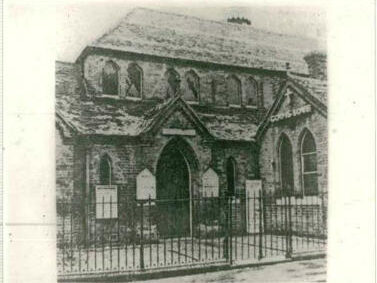
By the late 1600s, the Reading Baptists had secured the freehold for a meeting house and burial ground. This was on Church Lane (now Church Street), between London Street and Southampton Street. By 1751, the church had enough support to build a new meeting house on Hosier’s Lane. This meeting house opened for services in Easter 1752.
Growth of Village Chapels
By the late 18th and early 19th centuries, new churches emerged in Wokingham, Staines, and Wallingford. Many village chapels also started during this time. All of these were closely connected with the members of Hosier’s Lane, reflecting the church’s influence in nearby communities.
The Move to King’s Road
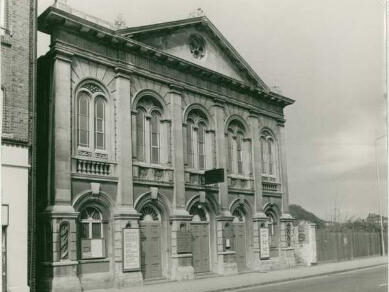
In June 1834, the church moved to a new chapel on King’s Road. This chapel was unique for its time, featuring gas lighting as a novelty. By 1868, the church needed more space for the Sunday School. Mr. Blagrave, a well-known Reading resident, donated a plot of land north of the Holy Brook. By 1870, the new school room was built and in full use.
Establishing Abbey Baptist Church at Abbey Square
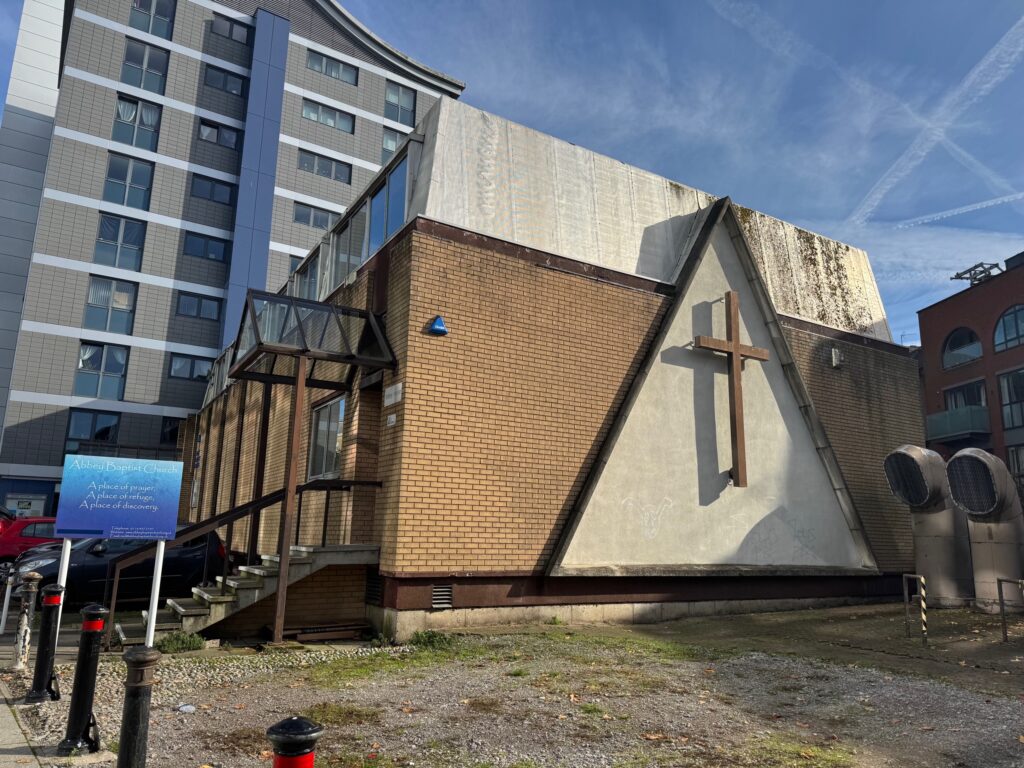
The church made its shortest move in 1979, crossing over the Holy Brook to Abbey Square. Located on the site of the former King’s Road School Room, this new building became Abbey Baptist Church. In 2019, the church celebrated 40 years in its current location.